Sep 22, 2026

Global Fintech Fest 2026 wasn't defined by its biggest announcement. It was defined by the industry's changing priorities.
When 77 countries, 1,200+ speakers, 250+ product launches, and 8,000 participating organisations come together under one roof, it's easy to focus on the scale. But after analysing 38 hours of main-stage discussions from Global Fintech Fest 2026, a more important story emerged. Financial services is no longer asking whether technologies like AI, tokenisation, and digital public infrastructure will reshape the industry. That question has already been answered. The real challenge now is whether institutions can operationalise these technologies responsibly, govern them effectively, and scale them without compromising trust.
The conference theme, "Potential to Impact," captured this transition remarkably well. Unlike previous editions, where conversations often revolved around experimentation and proof-of-concepts, this year's discussions consistently returned to execution. Banks weren't showcasing AI demos. Regulators weren't debating whether digital infrastructure mattered. Insurers weren't treating automation as a future initiative. Instead, speakers across sectors focused on production systems, governance frameworks, and long-term resilience. Innovation had matured into infrastructure.
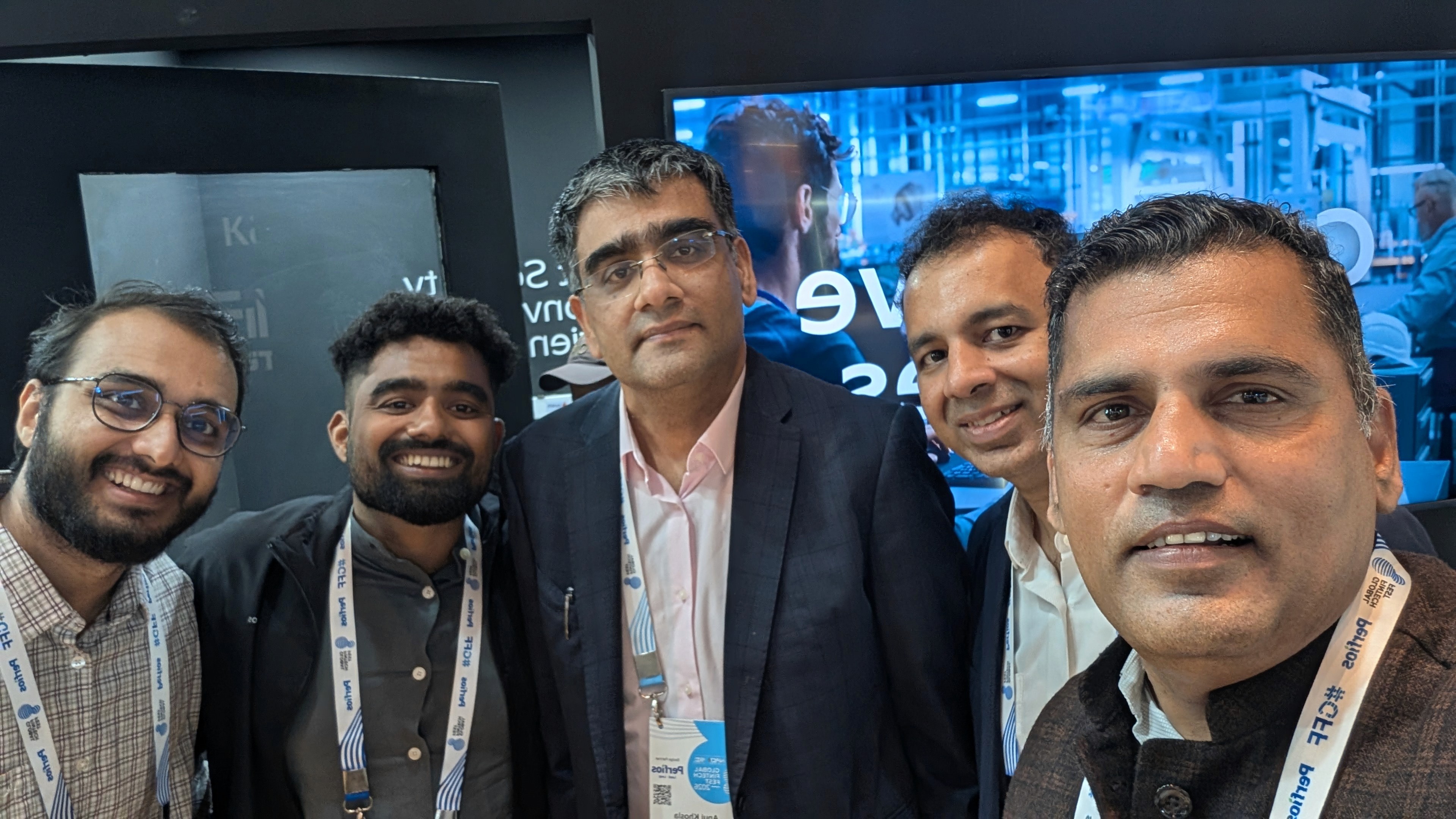
For us at SubVerse AI, that shift echoed conversations our co-founders, Rishi Kumar and Tanmay Lad, had throughout the event with leaders from Hitachi Payment Services, Google Cloud, Axis Max Life, HDFC ERGO, and PB Fintech. While each discussion approached digital transformation from a different perspective, they converged around a common observation: competitive advantage is increasingly being built through connected systems rather than isolated features.

The conversation has moved from AI tools to AI systems
Artificial intelligence remained the dominant topic throughout GFF, but the industry's vocabulary has changed. Only a year ago, enterprise discussions centred on copilots, chatbots, and productivity assistants that helped employees perform individual tasks. This year, those conversations expanded toward Agentic AI, coordinated networks of specialised AI agents capable of executing complete operational workflows from start to finish.
The distinction is significant because financial services rarely operate through isolated decisions. A motor insurance claim involves document collection, policy verification, fraud detection, approval workflows, and settlement coordination. Customer onboarding in banking combines identity verification, compliance screening, risk assessment, and account activation. Agentic AI promises to orchestrate these interconnected processes rather than simply assisting individual steps.
What stood out throughout the conference was that autonomy alone is no longer the selling point. Every discussion about AI eventually returned to governance. Institutions want systems that can explain decisions, maintain audit trails, operate within regulatory boundaries, and remain accountable when something goes wrong. That marks a decisive shift from experimentation toward enterprise deployment.
Tokenisation has finally found its enterprise use case
Few announcements captured this production mindset better than what many attendees described as Demat 2.0. On 10 September, RBI and SEBI jointly demonstrated permissioned tokenisation of corporate bonds integrated directly with wholesale CBDC infrastructure using atomic Delivery-versus-Payment settlement.
Unlike many blockchain demonstrations of previous years, these were not conceptual pilots. Production issuances included ₹500 crore by REC Limited, another ₹500 crore by Larsen & Toubro, and a ₹25 crore issuance by IIFL Finance.
The larger implication extends beyond bond markets. Tokenisation is gradually evolving from a crypto-adjacent conversation into financial infrastructure. Instead of asking whether distributed ledgers belong inside regulated finance, institutions are increasingly exploring where permissioned digital rails can reduce settlement friction, improve transparency, and strengthen market efficiency.
Trust is becoming the industry's defining infrastructure
If technology dominated headlines, trust quietly became the conference's central philosophy.
RBI Governor Sanjay Malhotra arguably captured this shift most clearly when he urged financial institutions to treat data as "a fiduciary responsibility, not a business asset." His broader message challenged a mindset that has shaped much of digital finance over the past decade: scaling quickly without equally strong governance is becoming increasingly difficult to justify in regulated industries.
The same theme resurfaced during Finance Minister Nirmala Sitharaman's valedictory address, where AI governance was framed as a board-level responsibility rather than a purely technical concern. Oversight, accountability, and internal standards, she suggested, must increasingly extend across organisational boundaries as technologies become more interconnected.
Taken together, these messages reflected an important evolution. The institutions likely to succeed over the next decade will not simply be those that deploy AI fastest, but those that build governance alongside intelligence.
Identity itself is entering a new era
One of GFF's most thought-provoking ideas was the transition from Know Your Customer (KYC) toward Know Your Agent (KYA). As AI systems begin initiating transactions on behalf of customers, verifying human identity alone becomes insufficient. Financial institutions increasingly need mechanisms that authenticate autonomous software alongside the people it represents.
The implications extend well beyond banking. Insurance claims, investment transactions, customer servicing, and payment approvals could all involve software agents acting with delegated authority. The challenge therefore shifts from proving who a customer is to proving whether an autonomous system has legitimate permission to act.
This represents one of the clearest examples of how AI is forcing institutions to redesign existing trust frameworks instead of simply layering automation onto legacy processes.
Payments are becoming invisible, and that's precisely the point
Another consistent pattern throughout GFF was the continued evolution of India's payment infrastructure toward increasingly invisible customer experiences.
NPCI's latest production deployments illustrated this trajectory. UPI Tap & Pay introduced contactless NFC transactions, while My UPI added AI-powered contextual safety features that evaluate merchant risk before payments are completed and allow users to pause outgoing debits during suspected compromise.
The bigger story isn't any individual feature. It's the cumulative effect of infrastructure improvements that quietly remove friction without requiring customers to think about the underlying technology.
That same philosophy appeared elsewhere. UIDAI announced plans to expand Aadhaar authentication capacity from 10 crore daily authentications to 25–30 crore, while introducing Aadhaar Light, a framework designed to lower verification costs for micro-lending and micro-insurance use cases.
The industry's strongest infrastructure increasingly becomes the infrastructure customers barely notice.
Security is shifting from verification to continuous vigilance
Perhaps the conference's most urgent warning came from cybersecurity discussions surrounding deepfake technology.
Maharashtra Cyber officials highlighted how increasingly sophisticated AI models running on ordinary consumer devices can now bypass traditional video KYC systems that previously relied on facial movement, blinking patterns, and visual artefact detection.
The implication is profound. Financial institutions can no longer assume that trust is established during onboarding alone. Security is becoming a continuous process built around behavioural monitoring, transaction intelligence, and adaptive verification rather than a single authentication checkpoint.
That broader shift also explains the launch of the Digital Payments Intelligence Platform (IDPIC), which began production deployment with eight commercial banking nodes and uses cryptographically hashed transaction intelligence to detect fraudulent patterns across institutions without exposing personally identifiable information.
The future of fraud prevention increasingly depends on institutions collaborating through trusted infrastructure rather than defending isolated systems independently.
Inclusion remains the unfinished opportunity
Amid discussions of AI orchestration, tokenised settlement, and quantum resilience, one message grounded the conference in reality.
India's biggest financial opportunity still lies beyond already-digitised customers.
Whether discussing pensions, insurance, identity infrastructure, or payment systems, regulators repeatedly emphasised expanding access to underserved populations through practical, scalable interventions. PFRDA's ambition to grow from 2 crore active pension subscribers toward a 30 crore national footprint, alongside launches like Tatkal NPS and NPS Swasthya, reflected that broader commitment to inclusion.
The lesson is clear: sophisticated technology creates the greatest value when it becomes accessible to first-time users rather than only improving experiences for digitally mature customers.
The industry's biggest challenge is no longer innovation
If there was one defining takeaway from Global Fintech Fest 2026, it is this: financial services has entered an execution economy.
The conference showcased impressive advances in Agentic AI, wholesale tokenisation, payment infrastructure, digital identity, and quantum preparedness. But it also acknowledged unresolved challenges, including AI liability frameworks, tokenised asset liquidity, last-mile commercial viability, and cross-border fraud enforcement.
Those gaps matter because they reveal where the industry's next phase of work will happen. The future will not be decided by who announces the most AI capabilities. It will be shaped by who builds systems that connect intelligence with governance, infrastructure with resilience, and innovation with trust.
That is ultimately what "Potential to Impact" came to represent.
Not a promise about what technology might someday achieve.
A challenge to build financial systems that can already deliver it.
Table of Content
More Insights

